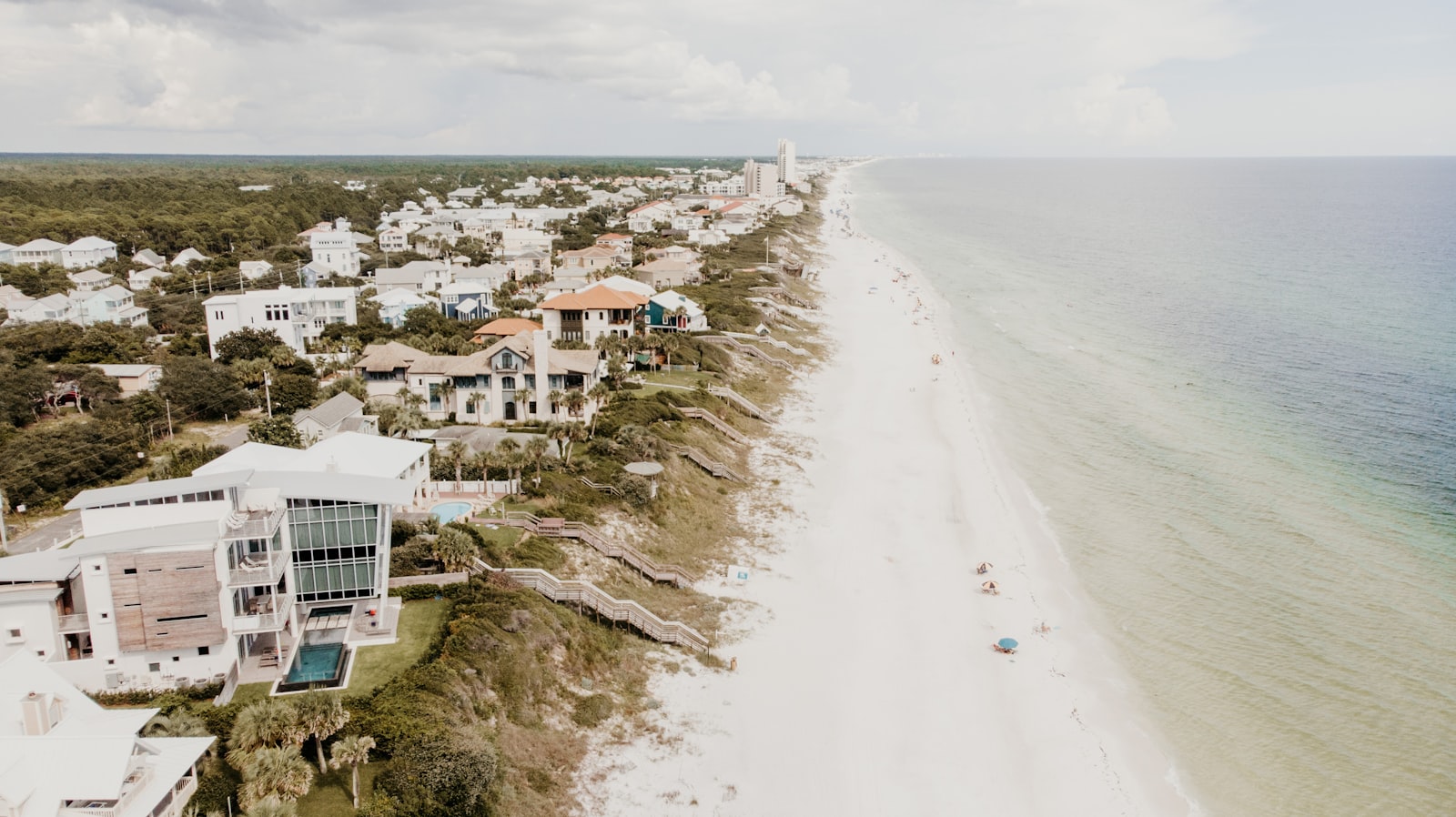
Go if you want the Emerald Coast's sugar-white sand and emerald water strung across ~16 deliberately-designed beach towns — Seaside's pastel cottages, Alys Beach's all-white masonry, Rosemary Beach's cobblestone — plus rare coastal dune lakes, and you'll pick your town before your hotel.
01 — The Verdict
Go to 30A. Then choose your town — because on this coast, the town you pick is the trip.
30A isn't a town. It's a 24-mile scenic highway along the Gulf in South Walton, Florida, strung with about 16 small, distinct beach communities — each one deliberately designed, and each one a slightly different vacation.
Seaside's pastel cottages and white picket fences (yes, the Truman Show town). Alys Beach's all-white masonry, unlike anywhere else in the country. Rosemary Beach's Dutch-Caribbean cobblestone. Grayton Beach's weathered, dogs-on-the-sand, old-Florida grain. Same sugar-white sand, same emerald water — completely different trips.
And running quietly behind all of it: the coastal dune lakes, 15 named freshwater lakes sitting yards from the Gulf — a phenomenon that exists in only a handful of places on Earth. Most visitors drive right past them.
So the real question here was never which hotel. It's which town, and which trip. Get that right, and everything after it falls into place.
We know this coast — the towns, the sand, the feel of the place are firsthand calls. Rosemary Beach in particular is Stephanie's own — the corner of 30A she knows on foot.
A Few Fits to Check First:
- This is a vacation-rental coast, not a hotel one. Most of 30A's lodging is cottages, condos, and houses booked through rental managers, not hotel rooms — true hotels are the exception here. Plan lodging early, budget a weekly rate plus cleaning fees, and expect a house with a golf cart over a lobby.
- The town is the decision — pick it before the property. 30A is a chain of walkable villages connected by one two-lane road, not one walkable city. Each town is walk-to-dinner-and-beach within itself; between towns, you drive or bike. Choose your town for its feel and its walk radius first (the town-by-town fork is on What to Do).
- You'll want a car. The 24-mile string of towns, the two airports, the state parks, and the grocery runs all need one. Once you're based, a bike or golf cart on the Timpoochee Trail is the local way to move around your town and the beach.
- Parking and beach access are the under-rated hassle. Much of the shoreline is fronted by private towns whose beach accesses are for that town's owners and rental guests only; public parking fills by mid-morning in season. Confirm your rental's beach access before you book.
- Summer is peak — and inside hurricane season. June and July bring the warmest water and the fullest, priciest towns. That's also hurricane season (June–November); direct hits are historically infrequent but real, so a summer or fall booking wants travel insurance and a flexible rate.
None of that is a reason not to go. It's the reason to decide which 30A is yours first — so you're not paying Alys prices for a family beach week, or fighting a two-town commute on a trip that wanted to walk everywhere.
02 — Choose Your 30A
Don't start with where should I stay. Start with who's going — 30A rewards three very different trips, and the right base depends entirely on which one is yours.
- Design & Architecture Couple. The "is it beautiful" traveler — here for the architecture as much as the beach.
- Family Beach-Rental Week. A group — often multigen — settling in for a week in a rented house or condo with a full kitchen, a pool, bikes, and the beach a short walk or golf-cart ride away.
- Upscale-Quiet Couple. A grown-up, low-key luxury week — a serene beach, a spa, a great dinner, and NONE of the family chaos or the party scene.
Same emerald water, same white sand — three genuinely different vacations. Pick yours, then step through the three doors below: what to do, where to stay, and where to eat.
Where to stay in 30A, FL
Our hotel picks are the verdict — this is just the lay of the land. Every stay on the map with live rates, so you can see what sits near what. Book whichever suits your trip.
Live map by Stay22 · rates from booking partners. We may earn a commission if you book through the map — it never changes which hotels we recommend.
When to Go, When to Book
Best months: May, September, and October. Warm Gulf water, thinner beaches, and softer rates than the summer peak — the balance windows.
Here's the shape of the year.
Peak summer (June–July, plus Spring Break in March and holiday weeks) — the warmest water, the fullest towns, the top prices. This is family beach-rental season: the longest days, the busiest squares, the heaviest 30A traffic. Rentals book months ahead and command top rates; July 4 and Spring Break are the absolute crush. 30A at its liveliest and its priciest.
The shoulder sweet spots (May, September, October) — the local's answer. Still-warm Gulf water, softer crowds, better rates. Late September into October ("locals' summer") is a favorite — warm water, thinner beaches — with one caveat: it's inside hurricane season. May is warm and green before the summer crush.
Quiet off-season (November–February) — the calmest, cheapest 30A. Mild but variable (cool snaps, cooler Gulf), with some restaurants and amenities on reduced or seasonal hours — a few places close seasonally through the winter. Beach-walk weather, not beach-swim weather; the low-crowd, low-price version of the coast for couples who don't need to get in the water.
Hurricane season (June 1–November 30, peak August–September) — say it plainly. The Florida Panhandle is hurricane-exposed. Direct major hits on South Walton are historically infrequent but real — the region felt Hurricane Michael's 2018 landfall to the east and Sally's in 2020 to the west. A summer or fall booking overlaps peak beach season, so carry travel insurance and a flexible-rate mindset. It's a genuine decision factor for the very months families most want to come, not a footnote.
The rule of thumb: rentals fill first — for a peak-summer week, book months ahead. Come in May or September–October for the best all-round balance, and in deep winter for the price.
The Real Version — Before You Book
The one-street-over truths — the caveats we'd want a friend to know before booking.
It's a rental coast, so plan lodging early. Most 30A stays are houses and condos, booked through rental managers, months ahead for peak weeks. Budget a weekly rate plus cleaning and service fees, and expect a house with a golf cart over a lobby. The handful of true hotels book up just as fast — see Where to Stay for the picks by trip.
The town is the decision — pick it before the property. 30A is a chain of walkable villages on one two-lane road, not one walkable city. Each town is walk-to-dinner-and-beach within itself; between towns, you drive or bike. Choose your town for its feel — design, family, quiet, old-Florida — and its walk radius first, using the town-by-town fork on What to Do.
You need a car, and a bike or cart helps. The 24-mile string of towns, the airports, the state parks, and grocery runs all need a car. Once you're based, the Timpoochee Trail — the paved path running the length of 30A, about 18–19 miles — is the pleasant, car-free way to move between adjacent towns; many rentals include bikes or a golf cart.
Parking and beach access are the real hassle. Much of the shoreline is fronted by private towns whose beach accesses are for that town's owners and rental guests only. Public parking is via regional/county accesses and Grayton Beach State Park — and they fill by mid-morning in season. Confirm your rental's beach access before you book, and arrive early at public beaches.
Two airports, both about 30–50 minutes. Destin–Fort Walton Beach (VPS) is closest to the west end; Northwest Florida Beaches International (ECP, near Panama City Beach) is closest to the east end and often has more flights. Pensacola (PNS) is farther west with more options. Confirm current service and drive times when you book.
FAQ — The 11pm Questions, Answered
What exactly is 30A? A 24-mile scenic coastal highway in South Walton, Florida, strung with about 16 small, distinct beach communities — Seaside, Rosemary Beach, Alys Beach, WaterColor, Grayton Beach, Seagrove, and more. It isn't one town; the defining decision is which community is yours.
Which 30A town should I pick? By the trip you want: Alys Beach for all-white architecture and quiet; Seaside for the original pastel square and a lively scene; Rosemary Beach for cobblestone calm and easy walkability; WaterColor for a resort-community family base; Grayton Beach for old-Florida character and the state park; Santa Rosa Beach for value and variety. The full town-by-town fork is on What to Do.
Hotel or vacation rental? Rental, for most trips — this is a rental-dominant coast, and a house with a kitchen and a golf cart is the default (book months ahead for peak weeks). If you want a real hotel instead, there's a short list — see Where to Stay for the picks by trip.
Do I need a car? Yes. Each town is walkable once you're based there, but the 24-mile string of towns, the airports, and the state parks all need a car — and a bike or golf cart is the local way to move within your town, on the Timpoochee Trail.
What are the coastal dune lakes? A rare natural signature — 15 named freshwater lakes sitting just yards from the Gulf, separated by a sand berm that periodically breaks open. The phenomenon exists in only a handful of places on Earth. Paddle Western Lake at Grayton Beach State Park or Eastern Lake at golden hour; most visitors miss them.
When's the best time to go? May, September, and October — warm water, thinner crowds, softer rates. June–July is peak (warmest water, fullest towns, top prices); November–February is the quiet, cheap, cooler off-season.
How many days do I need? Three to four covers it — a couple of real beach days, the three-town architecture walk, a dune-lake paddle, and a dinner or two, without rushing.
Is 30A walkable? Within each designed town, very — Seaside, Rosemary, Alys, and WaterColor are walk-to-dinner-and-beach. Between towns, no; that's a drive or a bike ride. Pick your town for its walk radius.
Is hurricane season a real concern? June through November, yes — direct major hits are infrequent but real. A summer or fall booking (peak beach season) should carry travel insurance and a flexible rate, and the value window is worth it.
Basis: 30A firsthand — the coast (Rosemary Beach specifically); we haven't been to every one of its ~16 communities. Last verified 2026-08-21. Prices are bands, re-checked before you'd act. We never rank by commission. (Lodging and dining basis notes live on the Where to Stay and Where to Eat pages.)
Make 30A & South Walton yours
Save this decision to your Travel Home — your trips, your picks, and everything you’re planning in one place. We’ll keep it current as prices and seasons move.