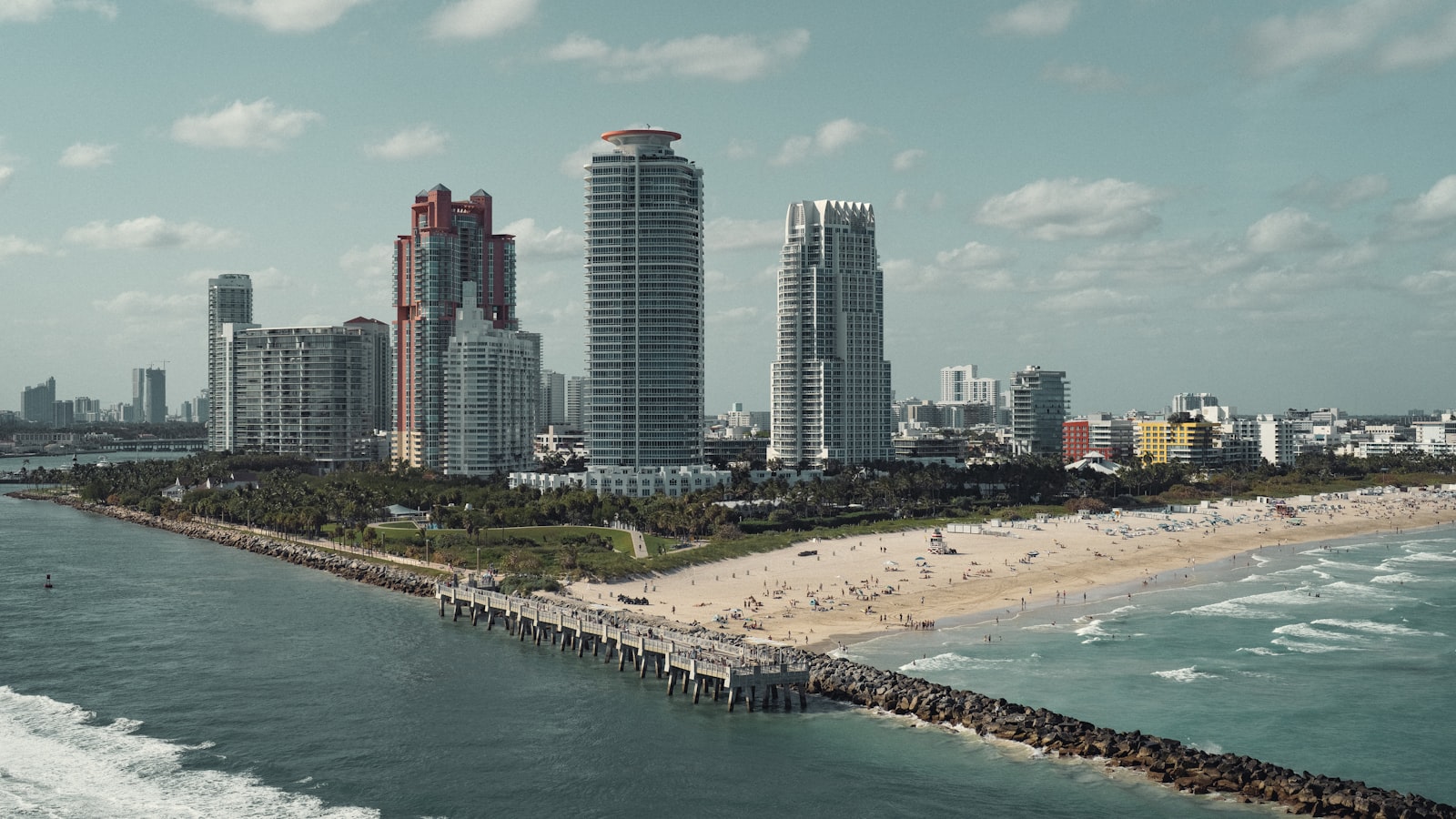
Go if you want beaches, bold design, world-class food, and nightlife all done at the top of the game — and you decide which Miami you're here for first.
01 — The Verdict
On the map, it looks like one destination. In reality, it's five very different experiences.
Go to Miami — but decide which Miami first.
You picture one place and arrive to find five. They share a name, a coastline, and that turquoise Biscayne Bay light — and almost nothing else about the day you'll actually have.
Come November through April for the postcard weather, sidestep the event weekends unless you're chasing them, and Miami stops being overwhelming and starts being yours.
A Few Fits to Check First:
- This is an expensive city, one of the priciest U.S. beach markets in winter, and it carries a real "scene tax" — steep valet, resort fees, pool and cabana minimums, and event-weekend surge pricing that can double a rate overnight.
- It's seasonal: the weather is glorious November–April and hot, humid, and storm-prone June–September (inside hurricane season).
- And it's a car-or-rideshare city — Miami is a collection of walkable islands in a car-dependent metro, wonderful within each district and a drive between them.
None of that is a reason not to go. It's the reason to decide which Miami first, so you're not paying beach-resort rates for a city trip, or fighting Ocean Drive traffic for a calm one.
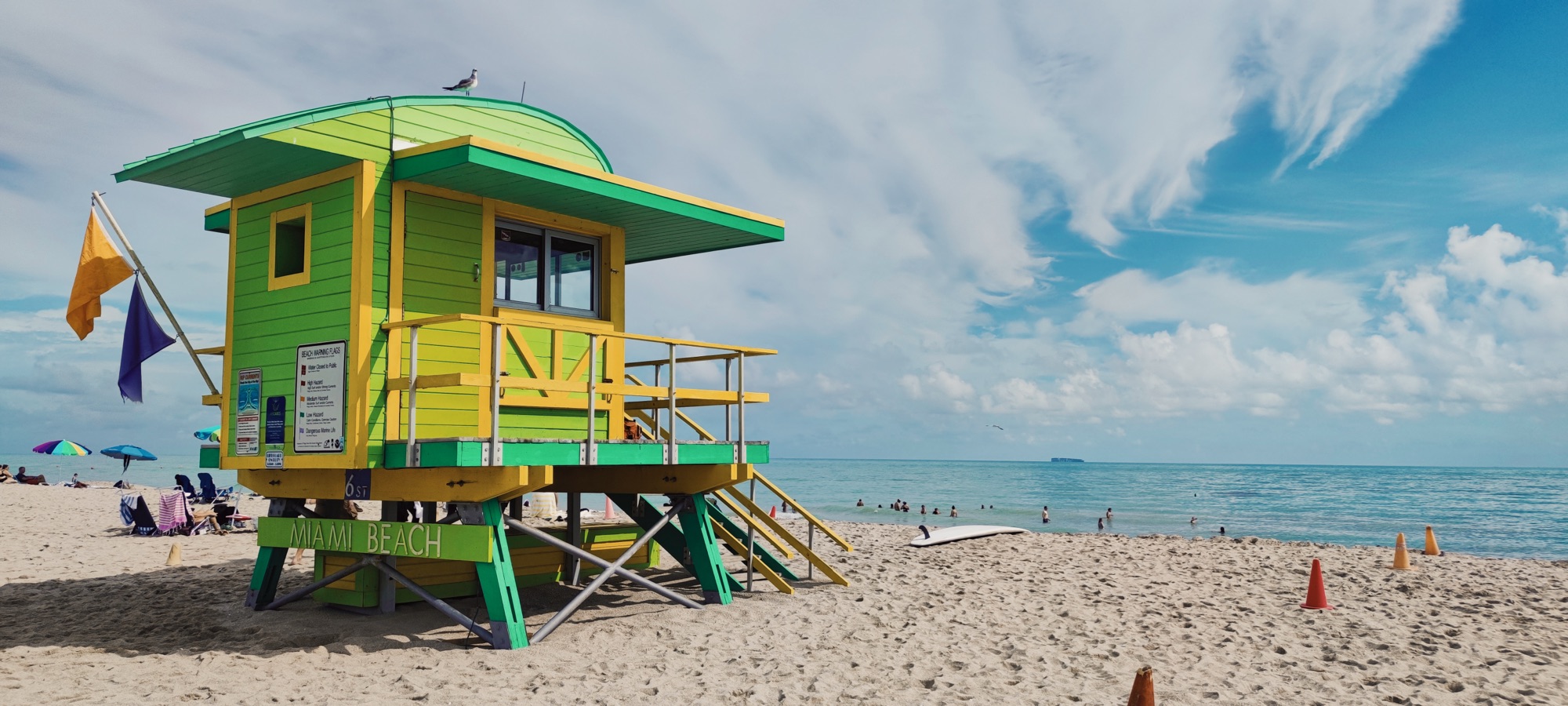
02 — Choose Your Miami
So don't start with where should I stay. Start with which Miami are you here for — the base, the tables, and the days follow from there, not the other way around.
- Design & Scene Couple. The Miami of the magazines — Art Deco and contemporary design done at the high end, a pool that is itself a scene, the beach at the door, and a marquee dinner…
- Celebration & Nightlife Group. A milestone, a bachelor/ette, or a friends' blowout that needs a big-energy resort to hold the whole group — a real pool scene, nightlife on-property or steps…
- Multigen Family. Space, real pools (plural), a kids' club or beach program, connecting-room or suite options, and easy beach + logistics for a group spanning grandparents to kids.
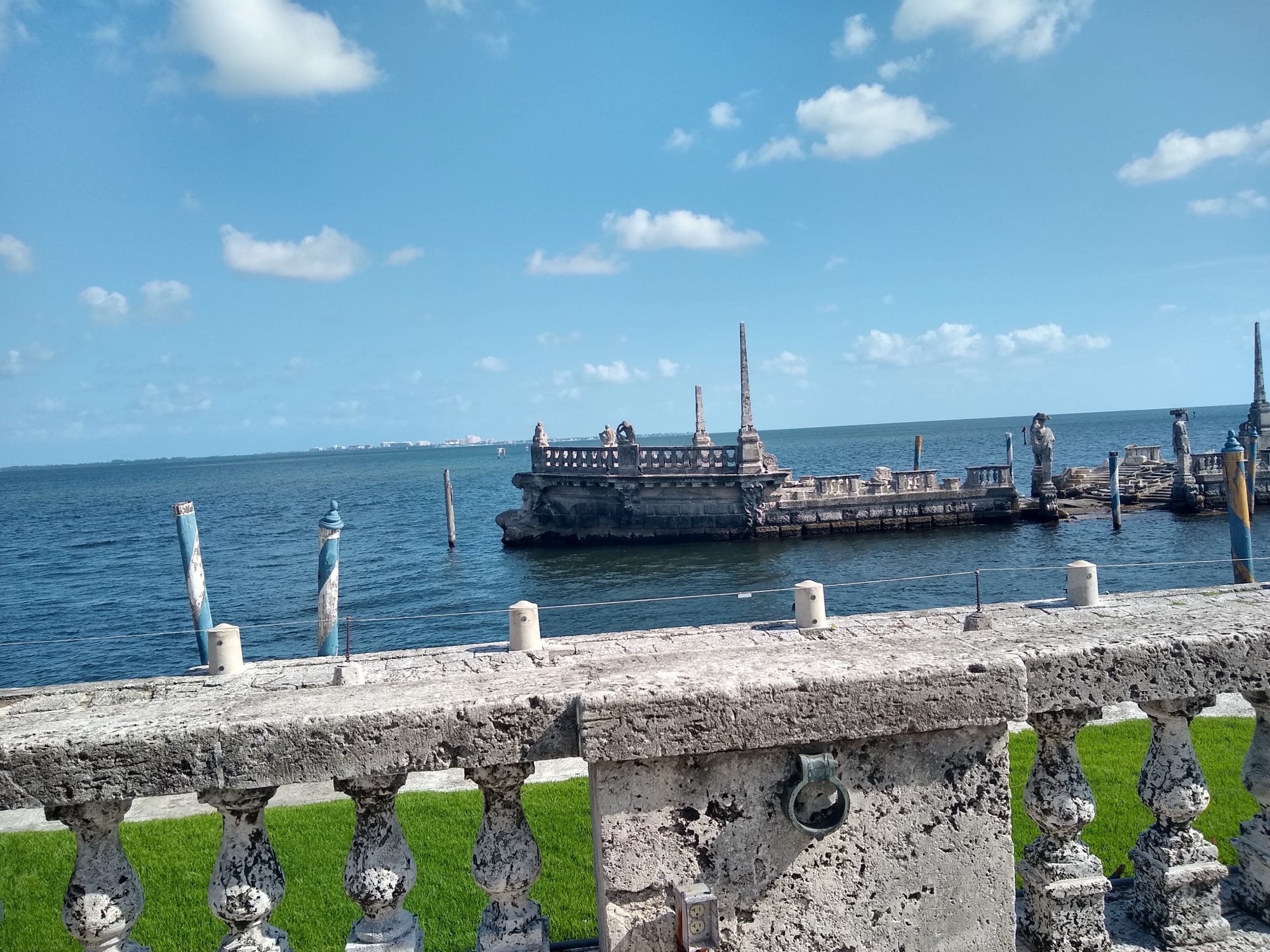
- Art & Culture Lover. The "is it beautiful" traveler here for the art and the architecture — Wynwood Walls, the Design District, PAMM, Vizcaya, the Art Deco district, Little Havana, and…
- Brickell / Urban-Luxe Traveler. Downtown high-rise Miami, not the beach — a glass-tower base in Brickell's financial/cosmopolitan core with rooftop pools and bay/skyline views, Brickell City…
Same name, same coastline — five completely different vacations. Miami does every one of them at the top of its game; the work is just matching you to the right one.
Pick yours, then step through the three doors below: what to do, where to stay, and where to eat.
Where to stay in Miami, FL
Our hotel picks are the verdict — this is just the lay of the land. Every stay on the map with live rates, so you can see what sits near what. Book whichever suits your trip.
Live map by Stay22 · rates from booking partners. We may earn a commission if you book through the map — it never changes which hotels we recommend.
When to Go, When to Book
Best months: November, December, March, and April — the dry-season sweet spots with great weather, minus the very peak-price crush of deep winter (and mind the event weekends below).
Here's the shape of the year.
High season (December–April) — the postcard weather, and the crowds and prices to match.
Warm, dry, low-humidity days (highs in the mid-70s to low-80s) draw snowbirds and event crowds; this is Miami at its best-weather and priciest, and January through April is the peak.
Book lodging and prime tables well ahead — marquee rooms and the hardest reservations fill weeks out.
The shoulder-value windows — May, and November.
Warm, thinner crowds, softer rates than deep winter.
May balances warmth with softening crowds before summer's heat and rain set in; November begins the dry season (though Art Basel looms in early December).
Late November is an excellent all-round window.
Summer (June–September) — cheapest and quietest, with a real trade.
Highs near or over 90°F, high humidity, near-daily afternoon thunderstorms, and the heart of hurricane season — in exchange for the lowest weekday rates and thinner crowds.
It can work (beach mornings before the storms roll in), but go in with open eyes.
Note that some seasonal institutions close in summer — a handful of beloved spots shut roughly early August to mid-October.
Hurricane season (June 1–November 30, peak August–September) — say it plainly.
Miami sits on the hurricane-exposed Southeast Florida coast. Direct major hits are historically infrequent but real and consequential (Hurricane Andrew in 1992, plus frequent tropical-storm brushes and flooding).
A summer or fall booking should carry travel insurance and a flexible-rate mindset, and watch the forecast; king-tide and heavy-rain street flooding in low-lying South Beach is a separate, recurring nuisance.
This is a genuine decision factor, not a footnote — but planned for, the value window is real.
The event weekends — decide whether you're seeking them or avoiding them.
These spike rates, book out restaurants, and surge rideshare across the city.
Great if you're here for them and plan ahead; brutal if you wanted calm or value. Confirm exact dates live each year — they move.
- Art Basel Miami Beach — early December (typically the first full week). The art-world descent: rates spike, restaurants book out, the whole beach becomes a scene. Made for culture travelers who plan; avoid if you want quiet.
- Formula 1 Miami Grand Prix — May (Hard Rock Stadium). A city-wide surge — hotels, pool parties, and pricing all jump.
- Ultra Music Festival — late March (Bayfront Park, downtown). A massive EDM festival; downtown and the beach fill with a young crowd and rideshare surges.
- Spring Break — roughly late February through March. Say it plainly: South Beach spring break has drawn large, rowdy crowds, and the City of Miami Beach has in recent years imposed curfews, causeway closures, and stricter enforcement on peak March weekends. Couples and families seeking calm should avoid peak spring-break weekends on South Beach, or base in Surfside, Coral Gables, or the Grove. Rules change year to year — confirm current-year measures before you book.
The Real Version — Before You Book
The one-street-over truths, and the caveats we'd want a friend to know.
Budget for the "scene tax," not just the room rate.
Miami is a high-cost destination and one of the priciest U.S. beach markets in winter and on event weekends.
The sticker rate is only part of it: expect steep valet parking, resort fees, pool and cabana minimums, bottle service, and event-weekend surge pricing that can jump a rate hard overnight. The celebration and design-scene modes feel this most.
Dining runs the full range — from Little Havana's Cuban windows and Wynwood tacos ($) to the marquee scene tables and Michelin rooms ($$$$) — so the value and a lot of the soul live at the casual, cultural end.
Every price band in this guide is research-derived and gets a dated live-rate re-check before anything you'd act on.
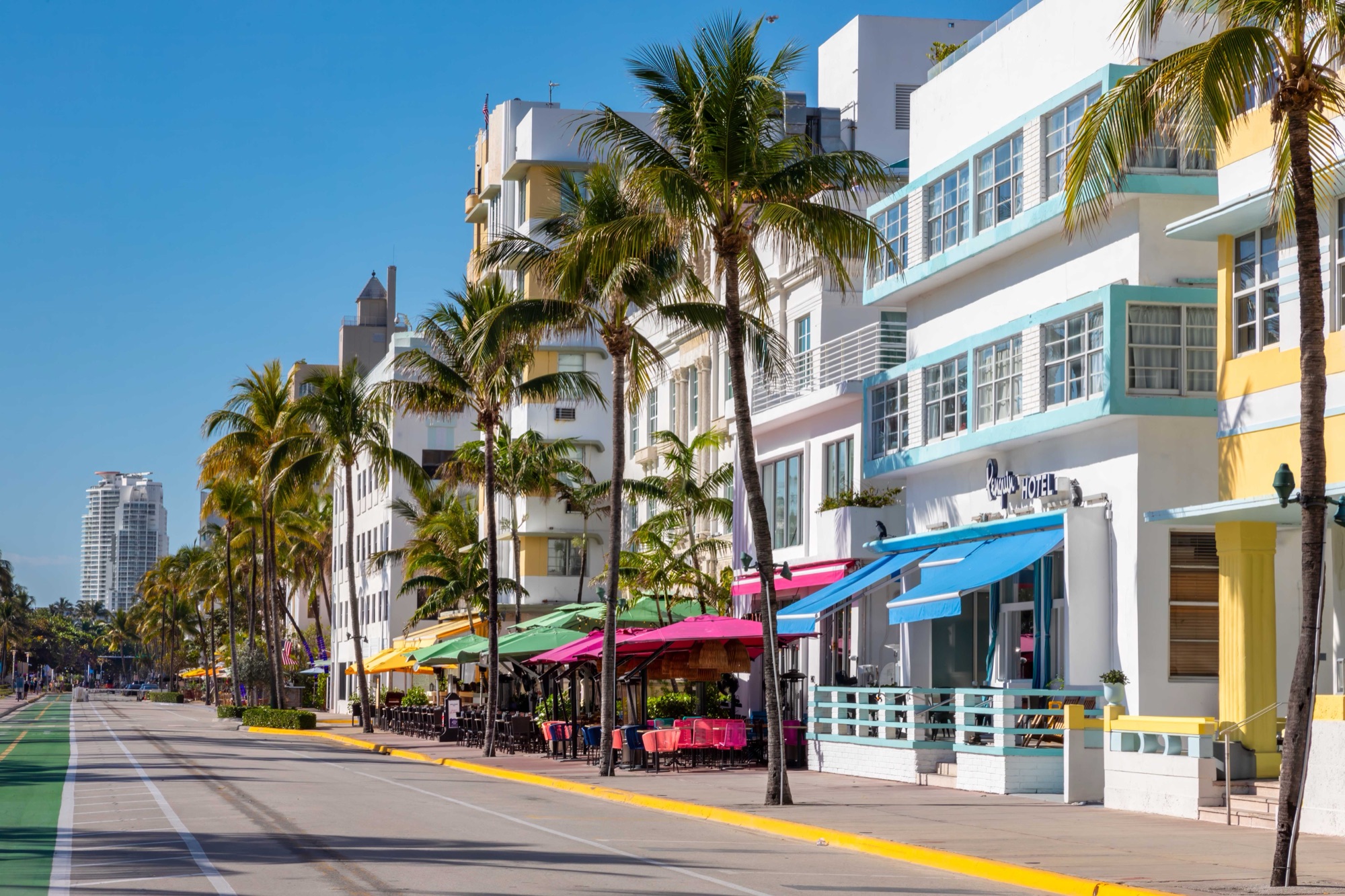
Ocean Drive is the tourist-trap zone — go for the Art Deco, not the sidewalk cafés.
The Ocean Drive strip is worth the walk for the pastel-and-neon Art Deco architecture, especially glowing after dark — but the sidewalk cafés along it carry documented tourist-trap risk: inflated menus, automatic gratuities, and drink-price surprises.
Walk it for the buildings, and eat where the guide sends you — the full note is on Where to Eat.
You'll want a car or rideshare — decide which by your Miami.
If you base in South Beach and mostly do the beach, Ocean Drive, and Lincoln Road, you can go car-light on rideshare (a car is actually a liability inside SoBe — parking is scarce and pricey).
But Wynwood, the Design District, Coral Gables, the Grove, Vizcaya, the Everglades, and the Keys all need a car or rides — Miami is a sprawling, multi-city metro, and the districts are a drive apart.
Rideshare is plentiful but surges hard on event weekends and at nightlife close.
The free Miami Beach Trolley, the downtown Metromover, and the Brightline train (Miami–Fort Lauderdale–West Palm–Orlando) cover limited stretches; transit isn't a practical everywhere-tool.
Confirm current drive times, fares, and transit routes live before you rely on them.
Two gateways.
Miami International (MIA) is the primary hub, roughly 30–45 minutes from South Beach by car in normal traffic (longer at peaks).
Fort Lauderdale–Hollywood (FLL) is about 45–60 minutes north and often cheaper on fares.
Confirm current drive times and rideshare fares live — they move with traffic and event weekends.
FAQ — The 11pm Questions, Answered
Which Miami should I stay in? Pick the one you're here for — the scenes are laid out up top. Then step through the doors for the single hotel (Where to Stay) and the single dinner (Where to Eat) that make it hang together. The rule of thumb: don't pay beach-resort rates for a city trip, or fight Ocean Drive traffic for a calm one.
How many days do I need? Three to four is the sweet spot for one Miami — a couple of real beach days, a marquee dinner or two, and one cross-town excursion (Little Havana, Wynwood, or Vizcaya).
Add a day or two if you want to sample more than one Miami, since the districts are a drive apart.
When's the best time to visit? November, December, March, and April for the dry-season sweet spots.
December–April is peak (best weather, highest prices). May and November are softer-value shoulders. Summer is cheapest with heat, storms, and hurricane-season trade-offs.
Which event weekends should I avoid — or seek? Art Basel (early December), the F1 Grand Prix (May), Ultra (late March), and spring break (roughly late February–March) all spike prices, book out restaurants, and surge rideshare.
Seek them if you're here for them and plan ahead; avoid them if you want calm or value.
Spring break in particular has brought curfews and causeway closures to South Beach — confirm current-year measures and base in Surfside, Coral Gables, or the Grove if you want quiet.
Do I need a car in Miami? Depends on your Miami.
Base in South Beach and mostly do the beach, Ocean Drive, and Lincoln Road, and you can go car-light on rideshare (a car is a liability inside SoBe — parking is scarce and expensive).
But Wynwood, the Design District, Coral Gables, the Grove, Vizcaya, the Everglades, and the Keys all need a car or rides.
It's a car-dependent metro of walkable islands.
Is Miami expensive? Yes — one of the priciest U.S. beach markets in winter and on event weekends, with a real "scene tax" beyond the room rate: steep valet, resort fees, pool and cabana minimums, and surge pricing.
The value and a lot of the charm live at the casual, cultural end — Little Havana's Cuban windows, Wynwood tacos.
Which beach or area is best for families? Surfside and Bal Harbour up north — calmer, wider, more residential sand, off South Beach's party grain.
Key Biscayne is another quiet-island family option.
Skip peak spring-break weekends on South Beach if you want calm.
Is South Beach safe / what should I watch for? South Beach is dense, touristy, and lively.
The main things to manage:
- The Ocean Drive tourist traps — inflated menus, automatic gratuities, drink-price surprises. Walk it for the Art Deco, eat elsewhere.
- Peak spring-break weekends, when the City of Miami Beach has imposed curfews and causeway closures.
Families and calm-seekers do better basing in Surfside, Coral Gables, or the Grove.
Basis: Miami firsthand (the city) — individual lodging and dining verdicts stay research-informed until we go, then upgrade to firsthand. Last verified 2026-07-31. Still tracking event-weekend dates (Art Basel · F1 · Ultra). Prices are bands, re-checked before you'd act. We never rank by commission. (Lodging and dining basis notes live on the Where to Stay and Where to Eat pages.)
Make Miami yours
Save this decision to your Travel Home — your trips, your picks, and everything you’re planning in one place. We’ll keep it current as prices and seasons move.