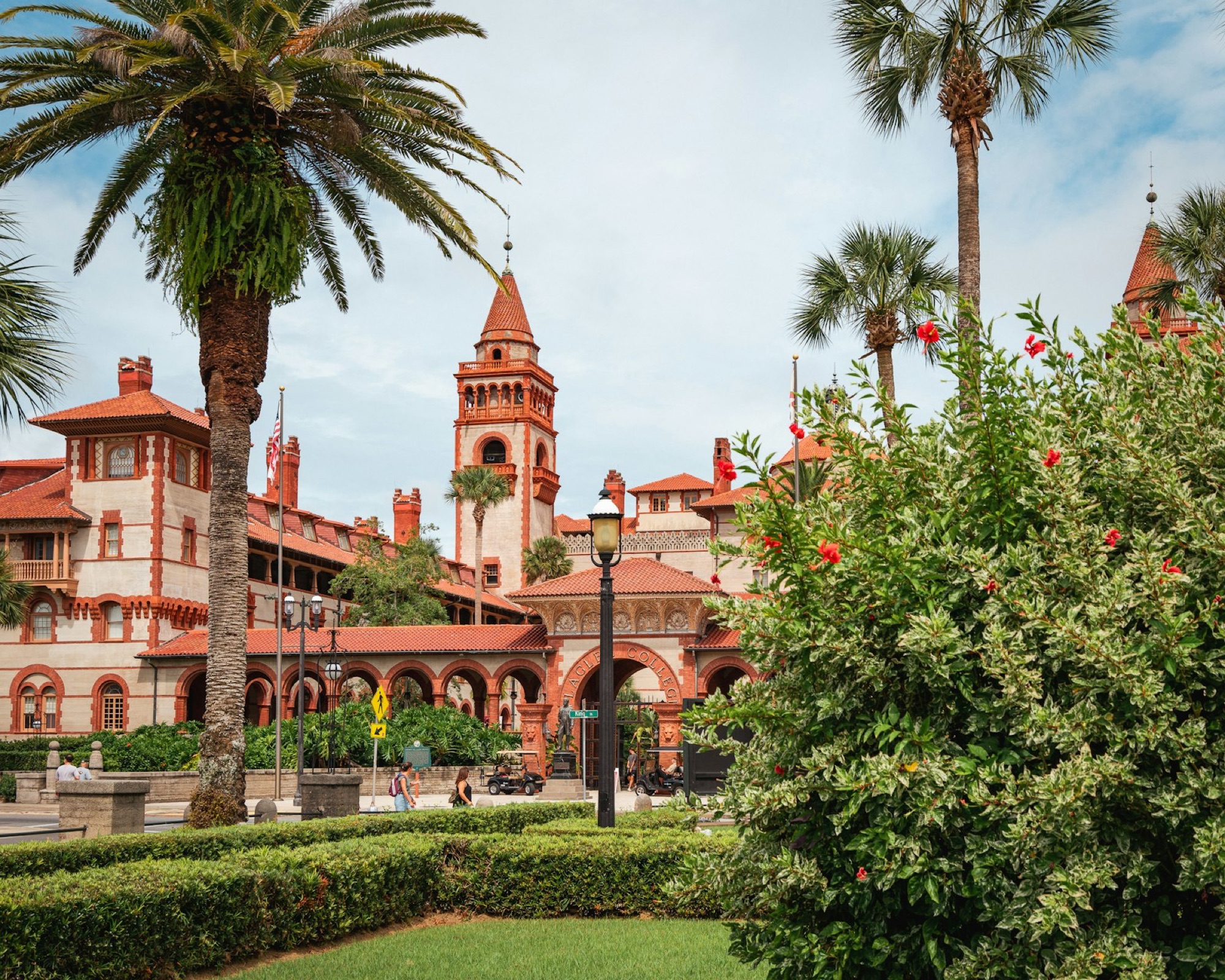
Go if you want to walk around inside 450 years of history — the 1565 oldest continuously occupied European-founded city in the country, a Spanish coquina fort on the bay, narrow colonial lanes, and Henry Flagler's Gilded-Age hotels turned into a college and a museum.
01 — The Verdict
Go to St. Augustine — you don't visit the history here, you walk around inside it.
Founded in 1565, it's the oldest continuously occupied European-founded city in the country — and it wears it. The history isn't a museum you drive to; it's the streetscape itself: narrow coquina-stone lanes, a Spanish fort on the bay, and Henry Flagler's Gilded-Age hotels turned into a college and a museum.
We've been. It really does feel like walking around inside 450 years at once.
But the same old city holds very different trips — a history-and-architecture couple, a romantic weekend for two, a multigen beach week, a milestone celebration. Same coquina streets, completely different vacation.
A Few Fits to Check First:
- The main drag of St. George Street is the tourist gauntlet — souvenir shops, fudge, and crowds. The history is genuinely real, but the good version is one block over: Aviles Street (billed as the oldest street in the country), Cordova, Charlotte, the fort, Flagler College, the Lightner. Go early or in the evening and let the side streets do the work.
- Parking is the real friction — the historic district's parking is limited and contested. Use the downtown garage by the visitor center, park once, and walk. A car is more hassle than help inside the old town.
- The old town is walkable; the beach is a drive. Anastasia Island — the beach, the Lighthouse, Anastasia State Park — sits across the Bridge of Lions, a 1920s drawbridge that opens on the half-hour for boat masts. Build the wait into any downtown-to-beach hop.
- Summer is hot, and the coast is exposed. June–September brings ~90°F days and near-daily afternoon storms, inside a hurricane season (June 1–Nov 30) that has flooded the low bayfront in major storms. It's the cheap window; go in with open eyes and travel insurance.
- Nights of Lights (mid-November into late January) drapes the district in millions of white lights — a genuine draw, and a crowded, higher-rate second peak, especially on weekends. A wonderful trip, not a quiet one. (Confirm the current year's dates.)
None of that is a reason not to go. It's the reason to decide which St. Augustine is yours first — so everything after it (what to do, where to stay, where to eat) falls into place instead of fighting you.
02 — Choose Your St. Augustine
Start with who's going and what you're here for — the base, the tables, and the days follow from there, not the other way around.
- History & Architecture Couple. To sleep inside the story — a walkable historic-district base steps from the Castillo, Flagler College (the old Hotel Ponce de Leon), the Lightner Museum, and St.
- Romantic B&B Couple. An intimate, adults-oriented inn — historic house, antiques, a jacuzzi tub or private porch, a real breakfast, a nightly happy hour, and calm.
- Multigen Beach Family. Space, suites or connecting rooms, a pool, and beach + fort logistics that keep a group spanning grandparents to kids simple.
- Celebration. A milestone trip — an anniversary, a big birthday, a proposal or honeymoon — where the stay is part of the occasion.
Same fort, same coquina streets — four completely different vacations. Pick yours, then step through the three doors below: what to do, where to stay, and where to eat.
Where to stay in St. Augustine, FL
Our hotel picks are the verdict — this is just the lay of the land. Every stay on the map with live rates, so you can see what sits near what. Book whichever suits your trip.
Live map by Stay22 · rates from booking partners. We may earn a commission if you book through the map — it never changes which hotels we recommend.
When to Go, When to Book
Best months: March, April, October, and November. These are the spring and fall shoulders — warm, drier, and thinner than peak summer or the holiday-lights stretch.
Here's the shape of the year.
Spring and summer (March–August) — the busiest. Spring break fills the district in March; June through August is the family-summer peak, and it comes with the heat — highs around 90°F and near-daily afternoon thunderstorms. Book lodging and prime tables ahead.
The shoulder value windows — late April into May, and September into early November. Warm, thinner crowds, softer rates. September and October are quietest of all, with one caveat: they sit inside hurricane season (below).
Nights of Lights (mid-November into late January) — beautiful, and a second peak. The historic district goes under millions of white lights — a genuine reason to come, and a crowded, higher-rate stretch, especially on weekends. A wonderful trip, not a quiet one. Confirm the current year's exact dates before you commit.
Hurricane season (June 1–November 30, peak August–October) — say it plainly. St. Augustine sits on the low, exposed Atlantic coast, and the historic bayfront floods in major storms and even king tides — Matthew (2016), Irma (2017), and Ian and Nicole (2022) each brought flooding to the old town and beaches. A summer or fall booking should carry travel insurance and a flexible-rate mindset. A real decision factor, not a footnote.
The rule of thumb: come in the shoulders (spring or fall) for the weather, come for Nights of Lights if the lights are why you're coming, and steer around spring break and peak summer unless the price is the point.
The Real Version — Before You Book
The one-street-over truths — the caveats we'd want a friend to know before booking.
Park once, and walk. The historic district's parking is limited and contested. Use the Historic Downtown Parking Facility garage by the visitor center (it fills on busy days); street parking is scarce and metered or permit-restricted. Many inns offer limited on-site parking — confirm per property. A car inside the old town is more hassle than help.
The old town is walkable; the beach isn't. The district — St. George Street, the Plaza, the fort, Flagler College, the Lightner, and most of the inns — is one walkable cluster. But Anastasia Island (the beach, the Lighthouse, the state park) is a drive across the Bridge of Lions, a 1920s drawbridge that opens on the half-hour for boat masts. Build that wait into any downtown-to-beach hop.
St. George Street's main drag is the tourist gauntlet — the real oldest-city is one block over. The souvenir shops are real; so is the history. Duck onto Aviles Street (billed as the country's oldest), Cordova, and Charlotte, go early or in the evening, and let the quieter side streets carry the trip.
Getting there. Most visitors fly into Jacksonville (JAX), about 45–60 minutes north by car (confirm the current drive time), with Orlando (MCO) and Daytona (DAB) as southern options; St. Augustine's own field (UST) is limited-service. A car from the airport is the norm.
The money truth. It's a mid-to-high-cost historic tourism town. The marquee historic inns reach $$$–$$$$ in season; the B&Bs, the beach resorts, and the US-1 corridor spread across $$–$$$; dining runs from cash-only institutions ($) up to fine dining ($$$$). Rates rise for spring break, summer, and Nights of Lights — the shoulder months are where the value lives.
FAQ — The 11pm Questions, Answered
When's the best time to visit St. Augustine? Spring (March–April) and fall (October into early November) — warm, drier, thinner crowds. Summer is hot, humid, and storm-prone; Nights of Lights (mid-November into January) is beautiful but a crowded, higher-rate second peak.
Do I need a car in St. Augustine? For a stay-downtown, history-first trip, mostly no — the historic district is walkable, with rideshare and tourist trolleys for the rest. Yes for the beach, the Lighthouse, and Anastasia State Park (across the Bridge of Lions), and yes from the airport.
How many days do I need? Two full days — one for the old city on foot, one for the island and the beach. Add a third to slow down, catch the fort's ranger cannon-firing, or trade a museum for a longer beach afternoon.
Should I stay downtown or at the beach? Downtown (the historic district) for a walk-to-everything history trip; the beach (Anastasia Island) for sand at the door, with the old town a ~10–15 minute drive. You can't have both at once — pick by which half of the trip matters more. The full read is on Where to Stay.
Is St. Augustine walkable? The historic district, very — the fort, St. George Street, Flagler College, the Lightner, and most inns are one walkable cluster. The beach side is a drive across the bridge.
Is the Castillo de San Marcos worth it? Yes — the oldest masonry fort in the continental U.S. (begun 1672), coquina walls right on the bay, about one to two hours, and central. Time it for morning or late afternoon to dodge the midday sun on the open stone, and catch a ranger cannon-firing weekend if you can. The full read is on What to Do. (Confirm current hours and fee on nps.gov/casa.)
What's the one thing not to miss for architecture? The Flagler College tour — the former 1888 Hotel Ponce de Leon, whose dining hall holds the largest collection of Louis Comfort Tiffany stained glass. Pair it with the Lightner Museum across King Street (the former Hotel Alcazar) for a Gilded-Age half-day.
Is the beach any good? Yes — Anastasia State Park is about four miles of protected Atlantic beach with a calm tidal lagoon that's good for kids, around $8 per vehicle; the town beach adds a pier and summer lifeguards. It's the Atlantic, not the Gulf — greener surf and real rip currents, so swim near lifeguards.
Are the ghost tours worth it? Only if you choose well. A highly rated, history-forward walking tour is a fun way to walk the old town at night; an oversold cart or trolley one is the classic letdown. Read recent, guide-specific reviews, and one per trip is plenty. The full read is on What to Do.
Is St. Augustine very touristy? The main drag of St. George Street is — souvenir shops and crowds. But the history is genuinely real, and one block over (Aviles, Cordova, Charlotte, the fort, Flagler College, the Lightner) the oldest city reasserts itself. Go early or in the evening.
Basis: St. Augustine firsthand — we've been to the city. Last verified 2026-08-21. Prices are bands, re-checked before you'd act. We never rank by commission. (Lodging and dining basis notes live on the Where to Stay and Where to Eat pages.)
Make St. Augustine yours
Save this decision to your Travel Home — your trips, your picks, and everything you’re planning in one place. We’ll keep it current as prices and seasons move.