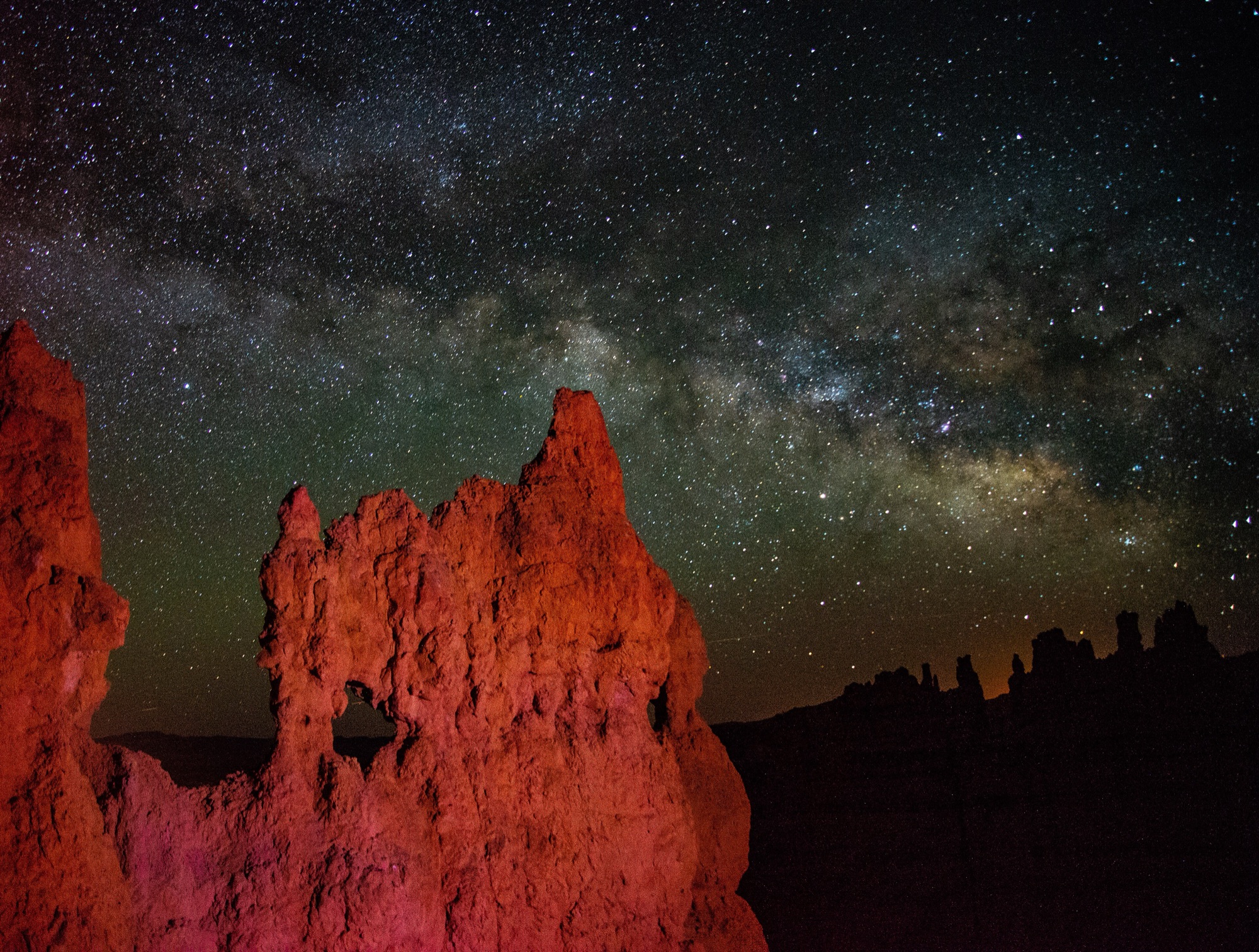
Worth it? YES; the dark sky is something Bryce does better than almost anywhere, and the free ranger telescope programs make it accessible. The play: aim for a new-moon window, dress warmly, and catch a ranger program near Sunset Point (or come for the June Astronomy Festival); even self-guided stargazing from the rim is exceptional.
Who it’s NOT for: Visitors who won't stay out late in the cold — programs run at night at 8,000+ ft; it gets cold fast. Anyone counting on a program on a specific date — ranger nights are seasonal (mainly Jun–Jul) and can be weather-canceled. Full-moon-night stargazers chasing the darkest sky — bright moonlight washes out the faint stars/Milky Way (great for moonlit hikes, though). Travelers who need it structured off-season — winter has fewer scheduled programs; check the calendar.
Skip it if: You can't be out late/cold, or your dates fall on a bright full moon or outside the main program season — then enjoy the sky casually from the rim and don't build the trip around a scheduled program.
Time needed: ~1–2 hours for a ranger telescope program; longer for the June festival or self-guided stargazing. (research: NPS astronomy programs)
Best time: New-moon nights, June–July, for scheduled ranger programs and the darkest skies; the Astronomy Festival is in June. Clear, moonless nights year-round are excellent for self-guided viewing; dress for cold at altitude.
Cost: $Booking: Ranger programs are generally free and first-come (no reservation), but seasonal and weather-dependent — check the current program calendar before your dates; the June festival may have its own schedule. Verify live.
aim for a new-moon window, dress warmly, and catch a ranger program near Sunset Point (or come for the June Astronomy Festival); even self-guided stargazing from the rim is exceptional.
Who is Astronomy & Dark-Sky Programs for?
Astronomy & Dark-Sky Programs is for dark sky stargazer winter, hoodoo hiking couple, first timer rim and short hikes, and easy viewpoints multigen.
Who is Astronomy & Dark-Sky Programs not for?
Astronomy & Dark-Sky Programs is not for Visitors who won't stay out late in the cold — programs run at night at 8,000+ ft; it gets cold fast. Anyone counting on a program on a specific date — ranger nights are seasonal (mainly Jun–Jul) and can be weather-canceled. Full-moon-night stargazers chasing the darkest sky — bright moonlight washes out the faint stars/Milky Way (great for moonlit hikes, though). Travelers who need it structured off-season — winter has fewer scheduled programs; check the calendar.
When is the best time to visit Astronomy & Dark-Sky Programs?
New-moon nights, June–July, for scheduled ranger programs and the darkest skies; the Astronomy Festival is in June. Clear, moonless nights year-round are excellent for self-guided viewing; dress for cold at altitude.
How expensive is Astronomy & Dark-Sky Programs?
Astronomy & Dark-Sky Programs is budget ($). Meravella shows prices as bands and never publishes exact figures it hasn't verified.
Basis research · last verified Mon Aug 10 2026 00:00:00 GMT+0000 (Coordinated Universal Time). Prices are shown as bands; confirm live before you go. We never rank by commission.