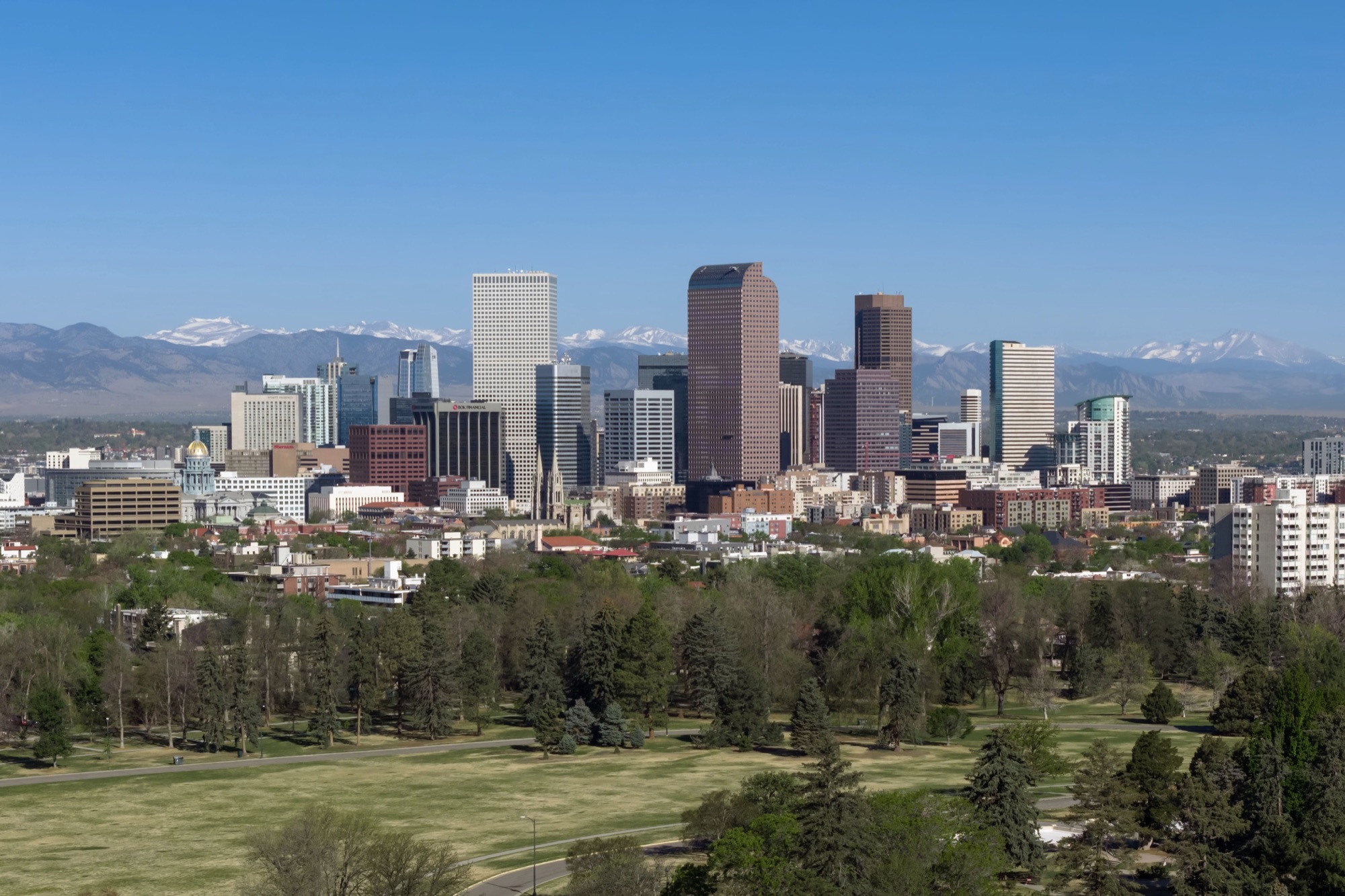
Go if you want a genuine, walkable high-plains city — one of America's best food-and-craft-beer scenes, real museums and arts, and historic downtown blocks — sitting right at the foot of the Rockies as your basecamp.
01 — The Verdict
Go to Denver. The only real question is which Denver you're here for.
This is a real, layered city, not a stopover on the way to the ski lift. It has one of America's densest craft-beer scenes, a food scene worth flying in for, a mural-covered art district, landmark museums, and a historic downtown of restored Victorian blocks — with the Rockies rising as a wall on the western horizon.
But the same city holds very different trips — a food-and-beer weekend in the thick of RiNo, a culture trip built around the museums and the theatre, a family week by the parks and the zoo, or a mountain gateway that bookends a week in the high country. Same Mile High City, completely different vacation.
So don't start with where should I stay. Start with who's going — the right base depends entirely on which Denver is yours.
A Few Fits to Check First:
- It really is a mile high. Denver sits at exactly 5,280 feet, and for the first day or two sea-level visitors feel it: you dehydrate faster, drinks hit harder, and the sun is stronger. Usually mild in the city itself — but if you're heading up into the mountains after, a night acclimating here genuinely helps. Drink more water, ease off the first-night round.
- It's a city at the foot of the Rockies, not in them. The mountains are the backdrop, not the doorstep. Red Rocks is about 15 miles out; Golden and the foothills a little farther; the ski towns and Rocky Mountain National Park are an hour-plus drive west. Wonderful, but a drive.
- It's walkable in pockets, stitched together by a train, a car, and rideshare. LoDo, RiNo, LoHi, the Golden Triangle, and Cherry Creek North are each walkable, and the airport A-Line runs right to Union Station. But between the neighborhoods, and out to Red Rocks or the mountains, you'll want wheels.
- Rates swing with the calendar. The Great American Beer Festival each fall, big Red Rocks concerts, and prime sports weekends fill hotels and push prices. Quote yourself a dated live rate, and book marquee dinners and shows ahead.
None of that is a reason not to go. It's the reason to decide which Denver first — so you're not paying downtown rates for a trip that wanted a pool, or hunting for parking on a trip that wanted to walk out into the breweries.
02 — Choose Your Denver
So don't start with where should I stay. Start with who's going — the base, the tables, and the days follow from there, not the other way around.
- Food & Craft-Beer Couple. Two people here to eat and drink their way through one of America's best food-and-beer cities — a walkable base in RiNo, LoDo/Union Station, or LoHi within…
- Arts & Culture Explorer. The "is it beautiful, is it interesting" traveler — the Denver Art Museum's landmark buildings and the dense Golden Triangle museum cluster, the Museum of Nature &…
- Mile-High Family. A family that wants a single walkable-ish base near Denver's genuinely kid-strong attractions — the Museum of Nature & Science and Denver Zoo in City Park, the…
- Mountain-Gateway Stopover. One or two nights in Denver bookending a mountain trip — a ski week, a Rocky Mountain National Park run, a summer road trip into the high country.
Same mile-high light, same mountains on the horizon — four completely different trips. Pick yours, then step through the three doors below: what to do, where to stay, and where to eat.
Where to stay in Denver, CO
Our hotel picks are the verdict — this is just the lay of the land. Every stay on the map with live rates, so you can see what sits near what. Book whichever suits your trip.
Live map by Stay22 · rates from booking partners. We may earn a commission if you book through the map — it never changes which hotels we recommend.
When to Go, When to Book
Best months: September, May, June, and October.
Early fall and late spring are the sweet spots — the best balance of warm, sunny days and thinner crowds.
Early fall (September–early October) — the all-round best window.
- Warm, dry, sunny days in the 70s and cool nights, thinning summer crowds, and the aspen turning gold up in the nearby mountains, with Red Rocks concert season still running.
- One spike to know: the Great American Beer Festival lands here (typically late September or early October) and fills hotels for that weekend. Coming for it? Book far ahead. Not? Route around it.
Late spring (late April–June) — the strong shoulder.
- Warming, greening, and less crowded than summer, with softer rates early on, and the outdoor-patio and Red Rocks seasons opening up.
- The catch: spring is actually Denver's snowiest season on average — heavy, wet spring snow can hit into May — and the weather changes fast. Pack for both.
Summer (July–August) — peak everything.
- Long sunny days, festivals, Rockies baseball, and a full Red Rocks calendar, with the year's largest crowds and highest rates. Hot, dry afternoons (often in the 90s) carry a near-daily chance of a late-day thunderstorm; evenings cool off. Book lodging, dinners, and concerts well ahead.
Winter (November–March) — the gateway season.
- Cold but often sunny, and the season the city fills with skiers heading up (the Winter Park Express ski train runs from Union Station on winter weekends). City rates can ease midweek; the mountains, not the city, are the draw. Snow comes and goes and often melts fast in town between storms.
One honest note on the weather: the local "300 days of sunshine" line is a cheerful stretch — National Weather Service data lands closer to 245 days with measurable sun. Still very sunny, still high and dry — just know the spring snow and the summer afternoon storms are real.
The Real Version — Before You Book
The one-street-over truths — the caveats we'd want a friend to know before booking.
Base downtown to go car-light — then rent for the mountains.
LoDo, RiNo, LoHi, the Golden Triangle, and Cherry Creek North are each walkable pockets, and downtown Denver is flat and compact by big-city standards. The airport A-Line runs from Denver International to Union Station in about 37 minutes — one of the easiest airport-to-downtown train links of any U.S. city. But a car (or a tour) earns its keep the moment Red Rocks, Golden, or a mountain day trip enters the plan, and gateway travelers heading to the ski towns or the parks will want a rental. Pick a walkable base, or rent a car for the region.
The altitude is a planning factor, not a footnote.
At 5,280 feet, Denver's dry, thin, mile-high air catches sea-level visitors off guard for a day or two: faster dehydration, quicker intoxication, stronger sun. It's usually mild in the city itself — the serious altitude is up in the mountains, 8,000 to 14,000 feet — but drink more water, ease off the first-night drinks, wear sunscreen, and if you're heading higher, a night acclimating in Denver first genuinely helps.
Never drive a brewery crawl.
Denver is one of the country's great beer cities, and the easiest way to do it is walkable in RiNo — multiple breweries within a few blocks, paired with the murals and the food halls. If you're spreading out across town, use rideshare or a designated driver. Never drive between tastings.
The high mountains change their rules year to year.
Red Rocks is an easy 15-mile drive and free to walk on non-event days. But the marquee alpine drive — Mount Blue Sky, renamed from Mount Evans in 2023 — runs only in season and in recent years has required timed-entry reservations. Confirm the current-year opening dates and permit rules before you build a day around it, and go prepared for extreme altitude and fast-changing weather. And note that some Denver spots — the high-alpine road above all — close or scale back seasonally, so confirm hours before you count on one.
FAQ — The 11pm Questions, Answered
When's the best time to visit Denver? Early fall (September into early October) is the all-round sweet spot — warm, sunny days, cool nights, thinning crowds, and Red Rocks season still running. Late spring (May–June) is the strong shoulder, with the catch that spring is Denver's snowiest season on average. Summer is peak and priciest; winter is the calm, value-priced gateway season for skiers.
Do I need a car in Denver? Not for a downtown-only trip — LoDo, RiNo, and Union Station are walkable, and the airport A-Line runs to the door in about 37 minutes. But rent one the moment Red Rocks, Golden, or the mountains enter the plan; those need a car or a tour.
How high is Denver, and will I feel the altitude? Exactly 5,280 feet — one mile — hence "the Mile High City." Most sea-level visitors feel it mildly for a day or two (faster dehydration, drinks hitting harder, stronger sun). Drink more water, ease off the first-night round, and if you're heading up into the mountains after, a night acclimating in Denver first helps.
How many days do I need? Two full days covers the city core — one for downtown, LoDo, and the museums; one for RiNo's murals and breweries and a Red Rocks afternoon. Add a day for City Park's museums and zoo, the Botanic Gardens, or a mountain day trip. The full day-by-day is on What to Do.
Is Denver in the mountains? No — it's a high-plains city right at the foot of them. The Rockies rise as a wall to the west, but Red Rocks is about 15 miles out, and the ski towns and Rocky Mountain National Park are an hour-plus drive.
What about Red Rocks — can I visit without a concert? Yes. On non-event days the park is free to walk, with hiking trails and the famous view of the plains and the skyline from between the two sandstone monoliths. A concert is the bucket-list version — book the specific show ahead. Either way you'll want a car.
Where should I eat in Denver? Denver is a genuine national dining destination now — modern-Israeli mezze, destination Italian, a deep bench of breweries and food halls, and the brunch scene half the country copied. The full picks, sorted by the kind of night you want, are on Where to Eat — and the sit-down dinners are worth booking ahead.
Basis: Denver firsthand — we've been to the city. Last verified 2026-08-19. Prices are bands, re-checked before you'd act — this is an event-driven market, so quote only a dated live rate. We never rank by commission. (Lodging and dining basis notes live on the Where to Stay and Where to Eat pages.)
Make Denver yours
Save this decision to your Travel Home — your trips, your picks, and everything you’re planning in one place. We’ll keep it current as prices and seasons move.