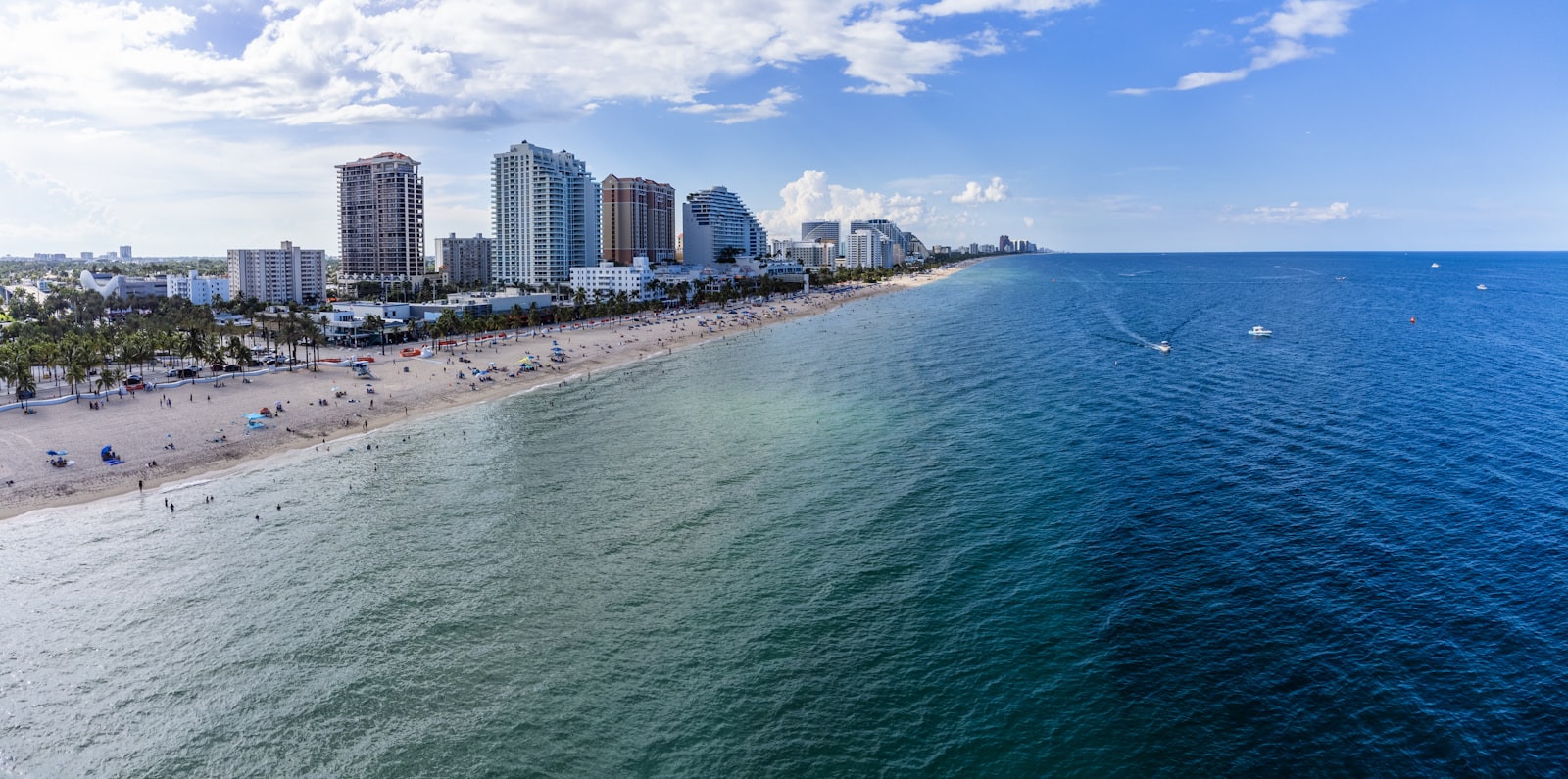
Go if you want a real Atlantic beach, 300-plus miles of navigable canals, and a coastal city that's polished without the velvet rope — the 'Venice of America.'
01 — The Verdict
Go to Fort Lauderdale. The only real question is whether you're here for the beach or the water — because it has both.
Most people picture the beach: a wide Atlantic strip, a landscaped promenade, and a low white wave wall that a whole town walks at sunrise.
But the thing that makes this city Fort Lauderdale and not Anywhere Beach, Florida is behind the sand — more than 300 miles of navigable canals, the New River, and mega-yacht rows they didn't nickname "the Venice of America" by accident.
It's polished without the velvet rope, and it's two trips in one: sand out front, boats out back, and a Water Taxi that stitches them together.
A Few Fits to Check First:
- It's a high-cost beach market, and it peaks December through April. Winter runs at the top of the market; the single busiest, priciest month is March. Summer is the genuine value window — with a weather trade you'll want to read below.
- It's a base-by-cluster city, not a walk-everywhere one. The beach strip, Las Olas, downtown/Riverwalk, Wilton Manors, and the marinas each walk beautifully on their own — but they're a drive or a Water Taxi apart. Pick the cluster you care about most, and let the boat connect the rest.
- The spring-break town of legend is gone — on purpose. Fort Lauderdale was the 1960s–80s beach-party capital, then changed its own laws in the mid-1980s and rebuilt around families, couples, boaters, and one of the country's leading LGBTQ+ scenes. March is still the busiest month, but it isn't a rowdy-frat destination anymore.
- Summer is hurricane season, said plainly. This is the exposed Southeast Florida coast; June through November (peak August–October) brings storm risk and periodic heavy-rain flooding. Direct hits aren't annual, but a summer or fall booking wants travel insurance and a flexible rate.
None of that is a reason not to go. It's the reason to decide which Fort Lauderdale first — so you're not paying beachfront-tower rates for a trip that wanted the canals, or basing downtown on a trip that wanted the sand.
02 — Choose Your Fort Lauderdale
So don't start with where should I stay. Start with who's going.
- Beach-Luxe Couple. Atlantic-front romance at the high end — sand and the beachfront promenade at the door, an oceanview balcony, a spa, a rooftop or beach-club pool scene, and an…
- Boating, Canals & Yachting Couple. The "Venice of America" trip — the reason to come is the water: 300+ miles of navigable canals, the New River and Intracoastal, the mega-yacht rows off Las Olas,…
- Multigen Beach Family. A real beach with easy logistics for a group spanning grandparents to kids — a private or calm stretch of sand, a pool with room to spread out (a lazy river is a…
- Celebration. A milestone trip — an anniversary, a big birthday, an engagement — where the whole point is to make it feel special.
Same beach, same gold light on the wave wall — four completely different trips. Pick yours, then step through the three doors below: what to do, where to stay, and where to eat.
Where to stay in Fort Lauderdale, FL
Our hotel picks are the verdict — this is just the lay of the land. Every stay on the map with live rates, so you can see what sits near what. Book whichever suits your trip.
Live map by Stay22 · rates from booking partners. We may earn a commission if you book through the map — it never changes which hotels we recommend.
When to Go, When to Book
Best months: November, December, February, and April.
These are the dry-season windows that flank the peak — warm and comfortable, without the deepest-winter crush of crowds and rates.
Here's the shape of the year.
High season (December–April) — the postcard weather, the top prices.
Warm, dry, and sunny (highs in the 70s to low 80s, low humidity, water around 70–75°F), and it's why the snowbirds come. Lodging runs at its peak, and prime dinner tables fill weeks ahead. The single busiest, priciest month is March — spring break and snowbirds arriving at once.
About that spring break — set expectations both ways.
Fort Lauderdale was the spring-break capital of the 1960s–80s, then changed its local laws in the mid-1980s to move on from it, and rebuilt around families, couples, boaters, and its LGBTQ+ community. So March is genuinely busy and expensive, but the modern city is not the rowdy-frat town of the old postcards. Come in March for the weather; just book early and know it's the peak.
The shoulder value windows — late April–May, and October–November.
Warm, thinner crowds, softer rates than deep winter — the balance months, before summer's heat fully sets in or after it breaks. October is lovely, with one caveat below.
Summer (June–September) — cheapest and quietest, with a real trade.
Highs near 90°F, high humidity, near-daily afternoon thunderstorms — in exchange for the lowest rates and the most open sand of the year. It can absolutely work: beach mornings before the storms roll in. Go in with open eyes.
Hurricane season (June 1–November 30, peak August–October) — say it plainly.
This is the exposed Southeast Florida coast. Direct hits aren't annual, but they're real, and the region sees periodic heavy-rain flooding. A summer or fall booking should carry travel insurance and a flexible rate. It's a genuine decision factor, not a footnote — but with that planned for, the value window is real.
The Real Version — Before You Book
The one-street-over truths — the caveats we'd want a friend to know before booking.
Base by cluster, and let the boat connect them.
Fort Lauderdale walks well within each cluster — the beach strip, Las Olas, downtown and the Riverwalk, Wilton Drive — but the clusters are a drive or a Water Taxi apart. So don't chase a hotel that's "central to everything"; there isn't one. Base where you'll spend your evenings, and use the Water Taxi and rideshare for the rest. A car is helpful, not essential — rent one for Wilton Manors, Harbor Beach, and the day trips.
Get on the water at least once.
If you do one thing here, ride the Water Taxi. The canals, the New River, and the mega-yacht rows are what separate this from any other beach town, and the hop-on/hop-off pass turns the water into both your sightseeing cruise and your transport between the beach, Las Olas, and downtown. One afternoon on the canals reframes the whole trip. (Fares and schedules move seasonally — confirm the current ones before you go.)
And the money truth.
Fort Lauderdale is a high-cost coastal market, and December through April is the top of it. Summer is the genuine value window, with the storm trade-off above. The waterfront-casual tables and the Las Olas mid-tier are where a lot of the value and the charm actually live.
FAQ — The 11pm Questions, Answered
When's the best time to visit Fort Lauderdale? November–December and February–April are the sweet spots — warm, dry, and short of the deepest-winter peak. March has the best beach weather but the biggest crowds and prices (spring break plus snowbirds). Summer is cheapest, with heat, afternoon storms, and hurricane-season trade-offs.
Do I need a car? Helpful, not essential. Each cluster — the beach, Las Olas, downtown, Wilton Drive — walks on its own, and the Water Taxi, Brightline, and rideshare cover a lot between them. Rent a car for Wilton Manors, Harbor Beach, and the day trips.
Is Fort Lauderdale still a spring-break party town? No. It was the spring-break capital of the 1960s–80s, then changed its local laws in the mid-1980s and rebuilt around families, couples, boaters, and its LGBTQ+ community. March is still the busiest month, but it's not a rowdy-frat scene anymore.
What's the Water Taxi, and is it worth it? It's the signature "Venice of America" experience — a hop-on/hop-off boat that doubles as a narrated canal cruise past the mega-yachts and waterfront mansions, running roughly 10am–10pm with stops at the beach, Las Olas, and downtown. Yes, it's worth it: one afternoon on the canals is what makes the trip Fort Lauderdale. An all-day pass runs around $30 for adults (confirm current fares).
How many days do I need? Two full days covers it — one for the beach and Las Olas, one for the Water Taxi and a day trip. Add a day for a slower beach pace or a night out in Wilton Manors.
Which day trip should I pick — the Everglades or Miami? Two ways to go: an Everglades airboat run through the sawgrass (about 25 minutes west) for wild Florida, or a Miami / South Beach day (about 30–45 minutes south, car-free on Brightline) for Art Deco, Wynwood, and a glossier big-city scene. Pick by appetite — nature west, city south.
Basis: Fort Lauderdale firsthand — we've been to the city. Last verified 2026-08-19. Prices are bands, re-checked before you'd act. We never rank by commission. (Lodging and dining basis notes live on the Where to Stay and Where to Eat pages.)
Make Fort Lauderdale yours
Save this decision to your Travel Home — your trips, your picks, and everything you’re planning in one place. We’ll keep it current as prices and seasons move.